 Hi Boox Popular Magazine 2025

For Deaf BSL users, access to a qualified interpreter is not a convenience. It is the difference between full participation in an interaction and a compromised version of it where critical information may be missed, misrepresented, or lost entirely.
Whether the context is a medical appointment, a workplace meeting, a legal consultation, or a public service interaction, the quality of the interpretation determines the quality of the communication.
Understanding how BSL interpreter services work, what qualified provision looks like, and how to access it effectively gives both Deaf individuals and the organisations serving them the foundation for getting it right.
What British Sign Language Actually Is

A persistent misconception about BSL is that it is simply English rendered in a visual format, a kind of signed equivalent of spoken words. It is not. British Sign Language is an independent language with its own grammar, its own syntax, its own regional variation, and its own cultural context.
The grammatical structure of BSL differs fundamentally from English, using spatial grammar, facial expression, and body position in ways that have no direct equivalent in spoken or written English.
This matters for interpreter services because it means that sign language competence exists on a spectrum, and informal or partial competence is not adequate for professional settings where accuracy is essential.
A colleague who knows some signs is not an interpreter. A family member who grew up with a Deaf relative is not a professional interpreter.
The situations where the distinction matters most are exactly the situations where consequences of miscommunication are greatest, which is why qualified, registered interpreters are the appropriate standard for any formal or high-stakes interaction.
Registration and Qualification Standards
In the UK, qualified BSL interpreters are registered with the National Registers of Communication Professionals working with Deaf and Deafblind People, NRCPD, or with the Association of Sign Language Interpreters, ASLI.
Registration requires demonstrated language competence assessed at a professional level, recognised qualifications in BSL interpretation, adherence to a code of professional conduct that includes confidentiality obligations and ethical standards, and ongoing continuing professional development to maintain registration.
When arranging interpreter services for any setting where accuracy, confidentiality, and professional conduct matter, confirming that the interpreter holds current registration with one of these bodies is the baseline quality check. Registered interpreters can be verified through the NRCPD online register, which is publicly accessible and regularly updated.
What Different Settings Require

The range of contexts that require BSL interpretation is broad, and the requirements in each setting are specific enough to affect which interpreters are appropriate. Medical settings require interpreters who can handle clinical and pharmacological terminology accurately while maintaining the confidentiality obligations of healthcare.
Mental health settings require not just language accuracy but the emotional and psychological nuance to render therapeutic content faithfully without distortion or editorialising.
Legal settings, including police interviews, court proceedings, and legal consultations, operate under specific procedural requirements and require interpreters who are familiar with legal language and the protocols that govern interpreted legal communication.
Workplace settings, from job interviews through training sessions to disciplinary proceedings, require interpreters who can sustain professional communication norms and handle confidential employment matters appropriately.
Educational settings require interpreters who can work at the pace and density of academic instruction over extended periods, which is a sustained performance demand that differs from a discrete appointment of limited duration.
In-Person and Remote Service Models
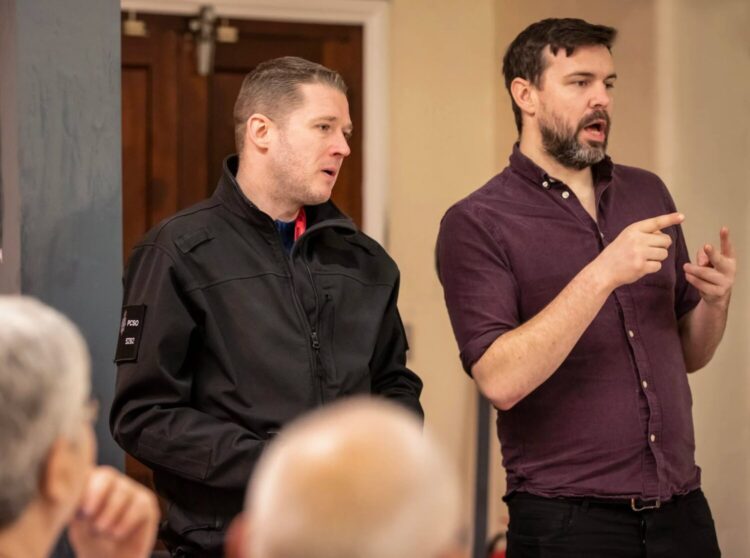
BSL interpretation is delivered through two primary models: in-person interpretation where the interpreter attends the location of the interaction, and remote video relay where the interpreter works through a video connection in real time. Each model serves different situations most effectively.
In-person interpretation is appropriate for complex, sensitive, or extended interactions where the interpreter’s physical presence supports the communication dynamic. Medical consultations involving examination, legal proceedings, and mental health appointments are settings where in-person interpretation typically produces the most complete and accurate communication.
Remote video relay interpretation is appropriate for shorter interactions, situations where in-person interpreter availability is limited on the required timeline, and telephone-equivalent communications.
Sorenson’s British Sign Language Interpreter service provides qualified BSL interpretation through both remote and in-person channels for the UK market, connecting Deaf users with professional interpreters across the full range of settings where communication access is needed, from brief telephone-style interactions to extended in-person appointments.
Planning Ahead Produces Better Outcomes
BSL interpreter availability, particularly for specialist settings that require interpreters with specific subject knowledge, is constrained by the limited number of qualified practitioners relative to demand.
Booking interpretation support with as much advance notice as the appointment timeline allows produces significantly better availability outcomes than attempting to arrange last-minute provision.
For organisations with recurring needs, establishing an ongoing relationship with an interpreter service provider and communicating anticipated booking volumes in advance allows the provider to plan capacity in a way that improves availability for time-sensitive requests. For individual Deaf users, knowing the services available and how to access them quickly reduces the friction of arranging interpretation for appointments that arise with limited notice.