 Hi Boox Popular Magazine 2025
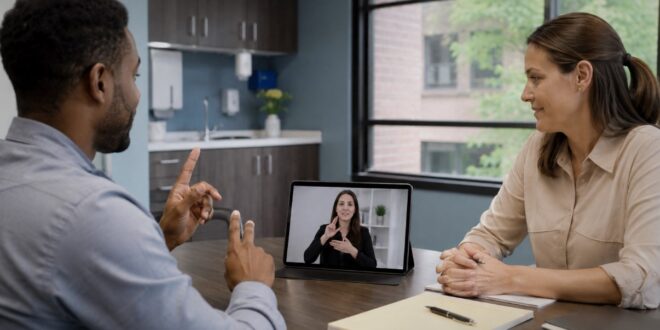
Communication access has long been one of the most persistent challenges facing deaf and hard of hearing individuals in everyday life. Medical appointments, legal consultations, workplace meetings, and customer service interactions all depend on clear, accurate communication. When that access is delayed, unavailable, or relies on informal arrangements that fall short of professional interpretation, the consequences are real and sometimes serious.
Video remote interpreting has changed the practical reality of that access in ways that were not possible a generation ago. The ability to connect instantly with a qualified sign language interpreter through a screen rather than waiting for an in-person interpreter to arrive has made professional interpretation available in situations where it previously would not have been.
What Video Remote Interpreting Actually Is
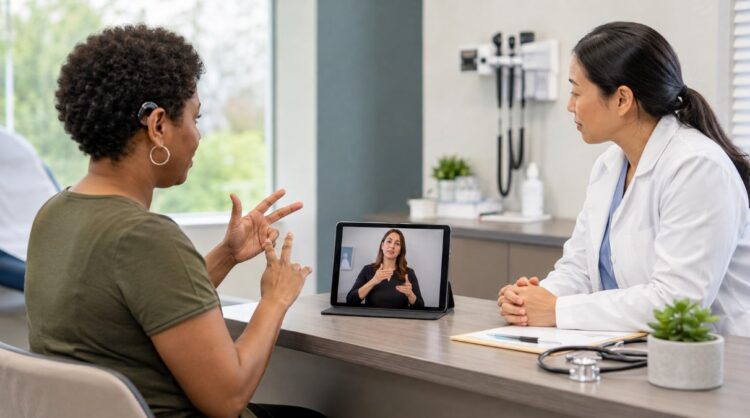
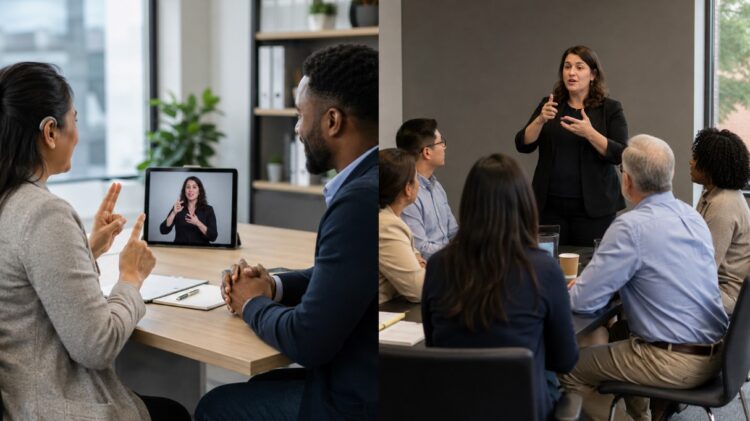
Video remote interpreting, commonly referred to as VRI, connects a deaf or hard of hearing person and a hearing person with a professional sign language interpreter through a video link in real time. Rather than requiring the interpreter to be physically present, all three parties can be in different locations while the interpretation happens live on screen.
The practical advantages over traditional in-person interpretation are significant for certain use cases. Availability is the most obvious one. In-person interpreters need to be booked in advance, are subject to travel time and geographic availability, and are simply not an option in situations that arise without warning. A video remote interpreting service removes those constraints almost entirely. A qualified interpreter can be on screen within seconds or minutes regardless of where the deaf person or the hearing person is located.
For healthcare providers, this matters acutely. A patient arriving at an emergency department who is deaf needs communication access immediately, not after a two-hour wait for an in-person interpreter to arrive. For businesses with deaf customers or employees, VRI removes the logistical barrier that previously made professional interpretation feel impractical for anything other than formally scheduled situations.
The Technology Behind It
The reliability of video remote interpreting depends directly on the quality of the video and audio connection. Interpretation through a low-quality, pixelated, or stuttering video feed is not interpretation in any meaningful professional sense. Sign languages are visual languages that communicate through handshape, movement, facial expression, and spatial positioning. A connection that cannot convey those elements clearly enough for the interpreter to read accurately breaks the entire function of the service.
This is why the technology infrastructure matters as much as the interpreter pool. Platforms built specifically for sign language interpreting optimize for the visual quality requirements of the task rather than treating it as a generic video call. High frame rates, strong resolution at conversational distances, and low latency are not nice-to-have features in this context. They are functional requirements.
Sorenson’s video remote interpreting service is built around these requirements, with a platform designed specifically for sign language communication and a network of qualified interpreters available across a range of settings from healthcare and legal to customer service and workplace environments.
Where VRI Works Best and Where Its Limits Are
Video remote interpreting is highly effective for a wide range of everyday communication situations. One-on-one conversations, appointments, consultations, and meetings where the parties are in the same room or the same geographic area translate well to the VRI format. The interpreter on screen can facilitate communication in real time without meaningful loss of accuracy compared to in-person interpretation for these use cases.
There are situations where in-person interpretation remains the stronger option. Extended assignments, large group settings, situations with complex environmental factors, or contexts where the deaf individual strongly prefers in-person interpretation for personal or professional reasons are all cases where VRI is a complement to rather than a replacement for in-person services.
The most useful framing is that VRI expands access rather than replacing existing options. It makes professional interpretation available in situations where in-person interpretation was never going to happen, whether because of timing, location, or the informal nature of the interaction.
The Broader Shift Toward Communication Access Technology
VRI sits within a broader shift in how communication access for deaf and hard of hearing individuals is being approached technologically. Automatic speech recognition, AI-assisted captioning, and real-time transcription tools have all improved significantly and provide useful access in many situations. For sign language users, however, these tools do not address the primary communication need, which is interpretation between a signed language and a spoken one rather than transcription of speech alone.
The technology stack serving deaf and hard of hearing communities is more capable than it has ever been, and video remote interpreting represents one of the most practically impactful developments within it. The gap between needing a qualified interpreter and having one available has narrowed to the point where immediate access is a realistic expectation rather than a fortunate exception.