 Hi Boox Popular Magazine 2025

Business leaders have traditionally understood workflow automation as a series of basic software triggers. A good example would be formulas in a spreadsheet. When an employee fills out a form, data is automatically copied to a new spreadsheet for record-keeping. This sort of automation is functional and necessary, but it is also extremely rigid. It’s not so usable in the era of AI product development.
Such rigid automation is also subject to breakdowns when data is entered incorrectly. This is a problem in the AI era because artificially intelligent environments are dynamic in nature. When AI is integrated into business operations, it can automate tasks that normally require human judgment, memory, and interpretation. But it is only possible when rigid rules are replaced by dynamic adaptations.
AI can completely change the business dynamic. By integrating it directly into daily operations, an organization can instantly become more efficient and productive. That is the goal of AI product development, a service offered by GojiLabs and other software development providers.
AI Workflow Automation Defined
GojiLabs describes AI workflow automation as the practice of embedding smart models directly into business processes. These models handle both simple and multi-step tasks repetitively and consistently.
One of the biggest differences between AI-driven workflow and legacy software function is that AI apps do not need exact commands to follow. An AI-driven workflow can adapt to messy, unstructured information. It can handle unpredictable input. For example, an AI tool can read a long email from a frustrated client and figure out what it is the client actually wants.
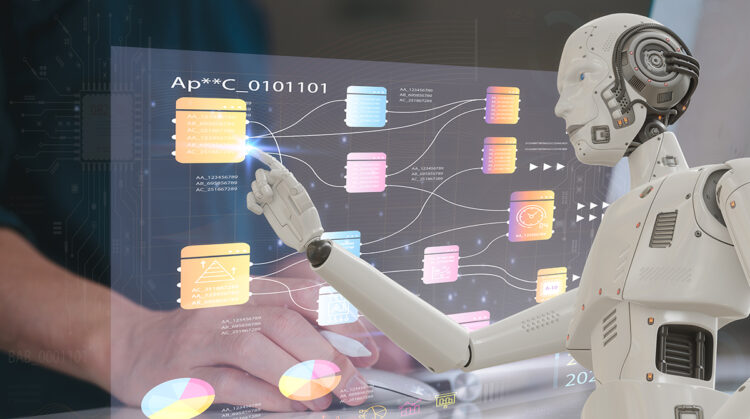
Turning Automation Into Measurable Business Outcomes
GojiLabs also says that the goal of implementing AI technology isn’t just to use it for the sake of presenting a modern image. AI and automation are all about driving tangible operational results. Those results ultimately drive the organization’s finances.
So how does AI product development turn automation into measurable business outcomes? Check out the following examples:
1. Eliminating Administrative Bottlenecks
Automating through AI helps companies relieve staff members bogged down by repetitive tasks. By letting AI processes take over these tasks, organizations can eliminate administrative bottlenecks. Every staff member becomes more efficient as a result.
2. Empowering Staff to Refocus
Employees who are not wrestling with daily administration can refocus on the company’s main strategy. Team members can spend their time building deeper relationships with clients, solving complex problems, and figuring out new ways to grow the company.
3. Scaling Operations Affordably
AI-driven automation allows a company to scale up operations without scaling up expenses. For example, automation increases efficiency to the extent that a single employee can do more work in the same amount of time. This is a perfect recipe for scaling up without spending more.
4. Accelerating Speed to Action
Unlike human employees, who take lunch breaks, clock out after an eight-hour day, and go on vacation, AI systems can run around the clock. Whether a system is analyzing sales leads or looking for errors in a financial statement, speed to action is accelerated because AI never stops working.

Deep Integration Is the Key to Success
Organizations looking to make the most of AI product development cannot treat AI like an isolated tool that works on its own. The secret to success is deeply integrating AI into every business process. It takes time, but the time is well spent in the long run.
Automated AI workflows are reshaping how modern organizations do business at scale. At the heart of this revolution are AI product development services offered by some of the brightest and most promising providers in the industry.